Modular and portable buildings are ideal for short-term use, whether it’s a construction site cabin, a canteen space or interim facilities during a traditional building renovation.
Many people assume because the building is temporary, it can make do with a less substantial foundation. But, even though the building may only remain in one location for a few months or a few years, its temporary foundation system still needs to safely support the required loads throughout that period.
Temporary foundation systems for relocatable buildings come in several forms, but there’s one that stands above concrete pads, screw piles and timber sleepers. We’re of course talking about the Jackpad® system. Strong and reusable, this blog explains why it’s important your short-term modular buildings have the right foundations for their safe working load, and why the Jackpad® system can be the ideal choice.
Do Relocatable Buildings Need Strong Foundations?
Just because a building is temporary and will be relocated at some point in the future, it will still require strong foundations so the building weight and point loads are properly supported.
Foundations need to keep the building stable and level for as long as it remains on site. Factors like ground condition still matter, and the foundation system must be specified so that the loads from the building remain within its safe working load (SWL).
What Foundations Do Portable Buildings Use?
There are several types of foundations for relocatable buildings, and while they are designed to be strong and support portable buildings safely, they come with certain drawbacks if the building is for temporary use.
- Precast concrete pads: Heavy to transport and position, these foundations can be awkward to level precisely and may still require ground preparation. They are reusable in theory, but handling and relocation can be challenging.
- Concrete blocks or sleepers: Simple and relatively low-cost, but generally less adaptable where ground levels vary.
- Screw piles: Faster than traditional concrete in many cases, but they tend to involve more steelwork, lifting equipment and installation effort. They can also take up more space beneath the building.
- Ground screws: Removable and relatively quick to install, but usually better suited to lighter structures. Their performance is highly dependent on ground conditions and correct installation depth.
- Timber sleepers: Cheap and straightforward, but less durable and less suitable for heavier or longer-term applications. Moisture, movement and degradation can also be concerns.
- Adjustable steel supports: Useful for levelling, but systems vary widely in load capacity and may not provide the same degree of load spreading or project-specific calculation as a dedicated foundation system.
With many of these types of modular building foundations, they can cause extensive ground disturbance, are limited on adjustability, have heavier installation requirements and reduced reusability. While they can be suited for the right temporary application, contractors will benefit more from a strong temporary foundation system that can be reused alongside the building in a different location.
What Makes Jackpad® Suitable for Relocatable Buildings?
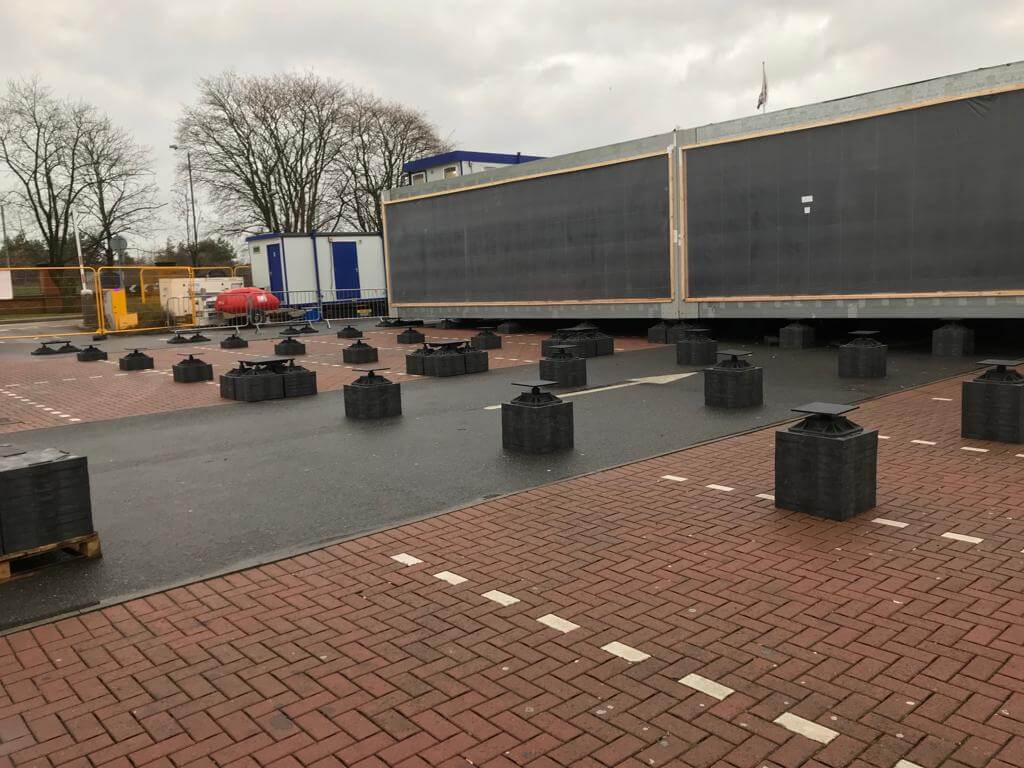
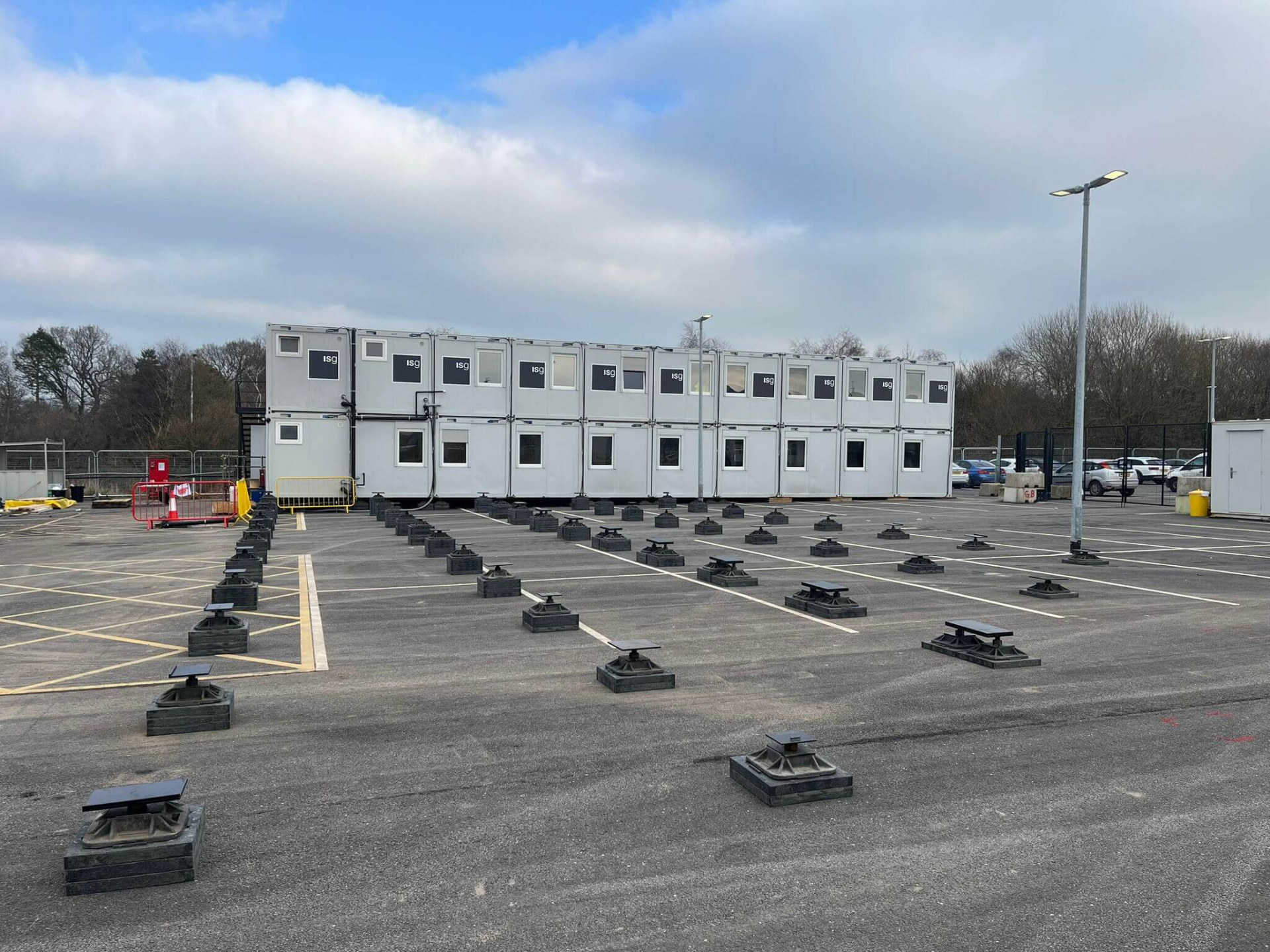
The Jackpad® temporary foundation systems have been specifically designed for portable and modular buildings that are in use for the short-term. The patented design features several parts made from recycled materials that join together to create a strong, adjustable and reusable system.
This benefit also means contractors can choose to either hire or purchase the foundation pads. If you know you only need to use the pads for a few months, hiring is a great cost-effective option. If you know your portable building will be relocated often, choose to buy and have the ideal foundations ready to install when your new site has been confirmed.
Supporting the Building at Its Load Points
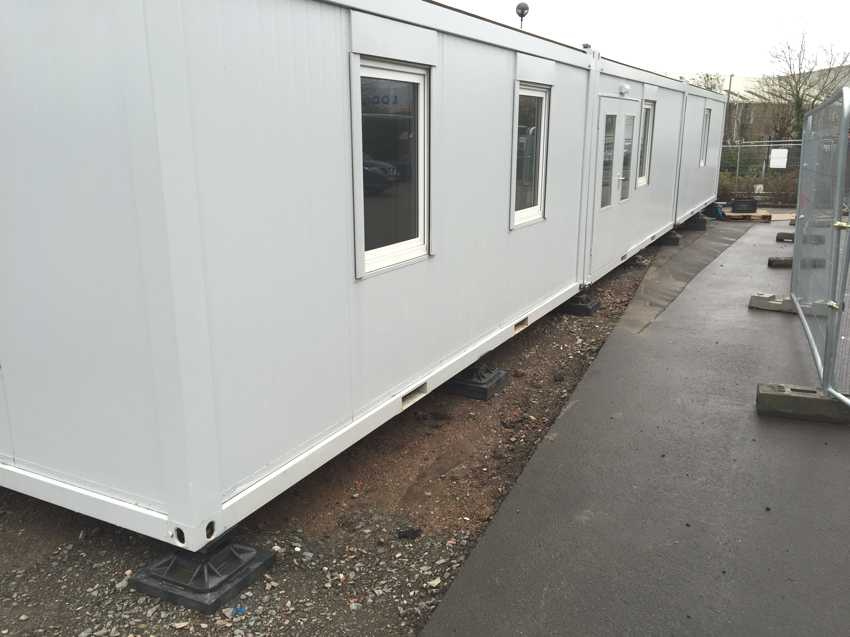
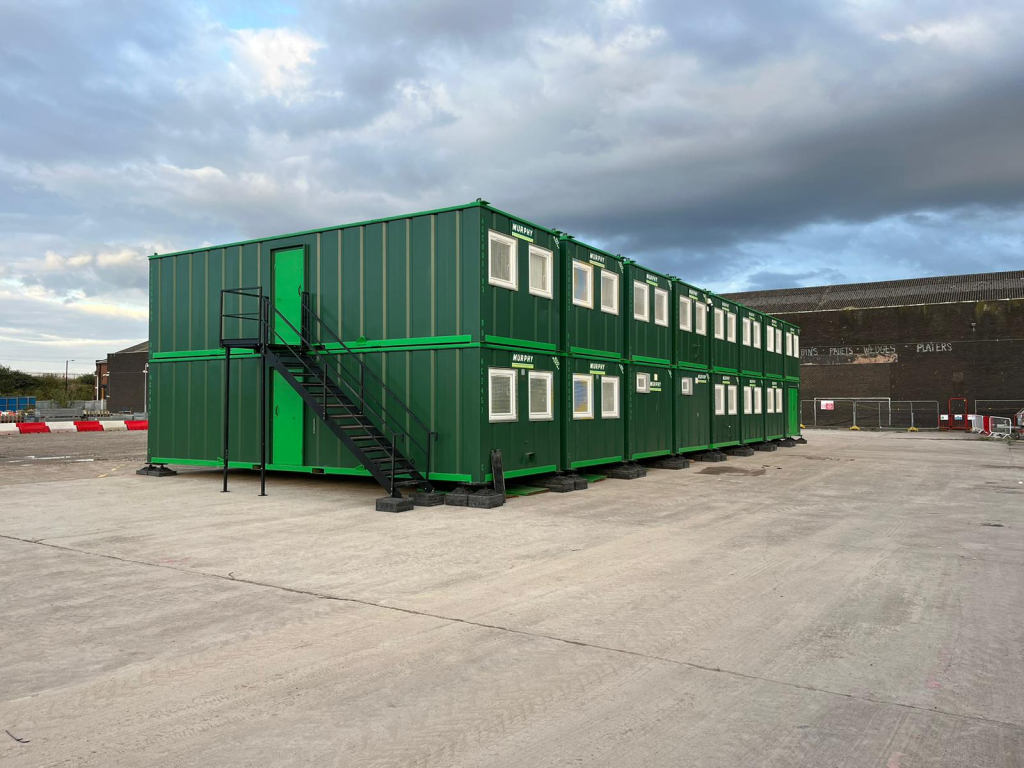
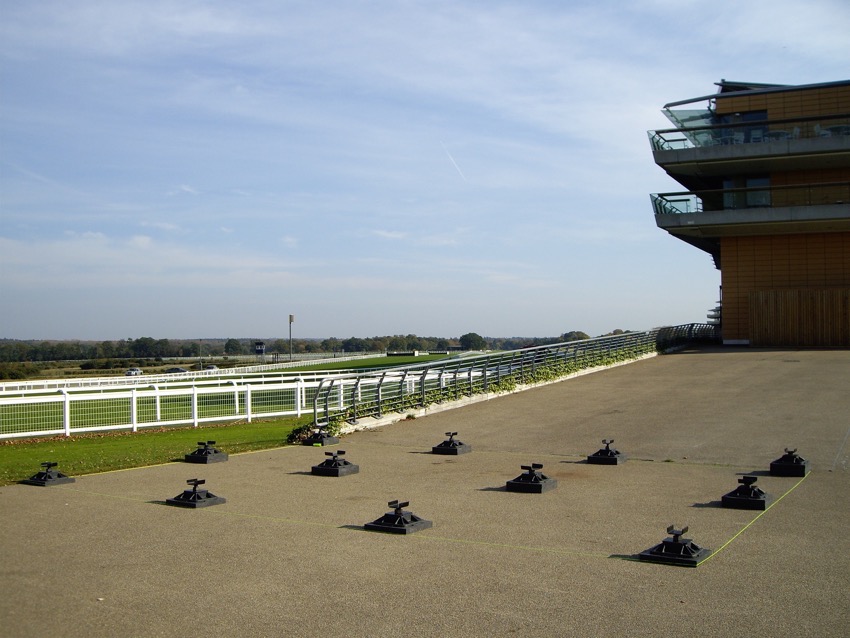
Jackpad® foundations have been proof tested and each single foundation pad has a SWL of 48kN. There are several configuration options, including double and quadruple position configurations, and the beam configuration to safely support modular buildings up to three storeys at their load points.
Each configuration will feature the Jackpad® 400 support block that’s manufactured from recycled plastic and spreads the point loads of the structure evenly.
Adjusting to Different Site Levels
Portable buildings are often relocated to different sites that feature challenging terrain and uneven ground. If ground-bearing capacity allows for it, the Jackpad® temporary foundation system can be adjusted using the steel adjuster. This allows you to make fine adjustments where ground levels vary, rather than spending more time and money on ground preparation and levelling.
The incremental packers also provide a simple and efficient solution to tackle uneven site levels. Where one part of the site sits lower than another, extra packers can be added beneath the support block to raise that foundation point. Combined together, the adjuster and incremental packers help the portable building adapt to different ground levels without relying on separate shims.
Configuring Jackpad® Around the Building and Site
As each portable building and site will be different, with many sites undergoing significant changes as project progress, it’s best to have temporary foundation systems that adapt to the structure and surroundings.
Jackpad® foundations are arranged based on the building loads, ground-bearing capacity and site conditions, rather than using a one-size-fits all setup. This means each site the structure is relocated to will receive a bespoke configuration that’s still much quicker to install than going for more traditional concrete foundations.
Can a Reusable Foundation System Still Be Structurally Strong?
Temporary foundation systems sound like they’re a one-and-done solution, but this simply isn’t the case. Reusability and strength are not opposites. With Jackpad® foundations, each component is designed to be recovered and reused while still providing calculated structural support when correctly specified and installed.
So, at the end of one modular project, the foundation pads can be removed, recovered and prepared for reuse elsewhere. This is thanks to the innovative design and the pads being independently tested, which has seen many pads being used in the field for over 25 years.
Jackpad® foundations have gone from supporting a temporary school building to being used for construction site cabin foundations, with each new project considering SWL, ground-bearing capacity and the building loads.
Even after multiple uses, you can rest assured that these reusable, temporary foundation systems will remain structurally strong for however long your portable building stays in use.
Are Jackpad® Foundations Only Suitable for Short-Term Projects?
Even though they’re reusable and particularly suited to relocatable buildings, these foundation pads can be used for permanent modular builds, not just short-term applications, where the site conditions, building loads and ground-bearing capacity are suitable.
The same benefits still apply, including precise adjustment, minimal-to-no ground preparation in the right conditions and a foundation system configured around the requirements of the building. Whether your modular building is staying in place for months or for a much longer period, Jackpad® provides a practical alternative to more traditional foundation methods.
Strong Foundations for Buildings Designed to Move
A relocatable building still needs a foundation system that can keep it stable, level and properly supported throughout its time on site. Jackpad® is designed to do exactly that, while also giving you the flexibility to recover, reuse or relocate the system when the project changes.
For modular buildings that are designed to move, it makes sense to choose foundations that can move with them. Jackpad® combines structural support, adjustability and reusability in one system, helping you reduce unnecessary groundwork, simplify site remediation and get more value from your foundation setup over multiple projects.
Get in touch with us to discuss your short- or long-term modular building project and we’ll help advise on the ideal configuration and option to hire or purchase