Modular buildings aren’t anything new, but the way they are manufactured and used has become more sustainable than before. Compared to traditional building methods, modular buildings reduce waste, carbon emissions and can be built in a fraction of the time.
It’s not just the materials and manufacturing methods that make modular buildings sustainable, it’s their entire lifecycle, as well as the foundations and footings.
Let’s look at exactly what makes modular buildings sustainable, from foundations to the final finish.
Sustainable Foundations: Groundworks & Site Preparation

Standard groundworks and site preparation can be completed alongside the manufacturing of the modular buildings, but traditional excavation and concrete foundations can still cause site disruption and impact the environment. Concrete requires cement production, which is very energy intensive and produces large amounts of CO2 emissions.
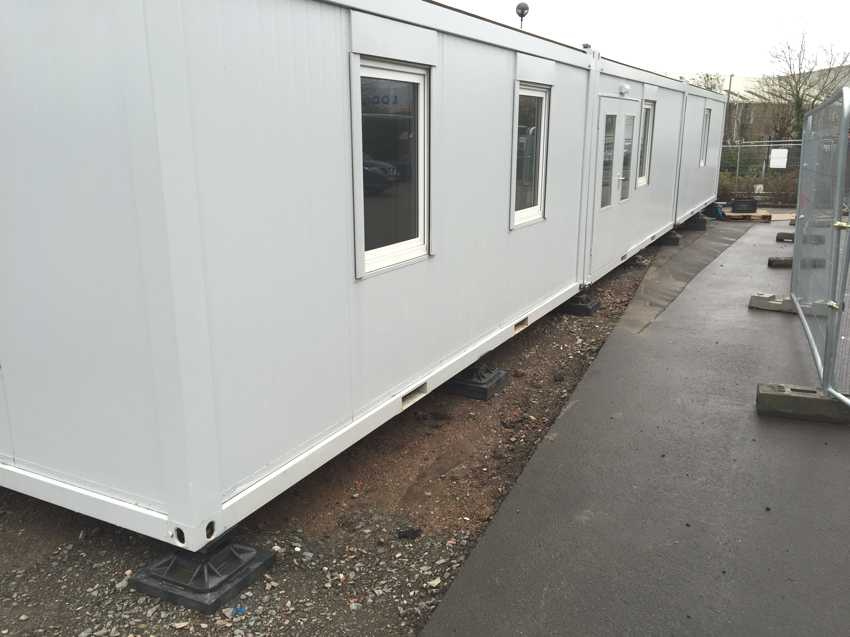
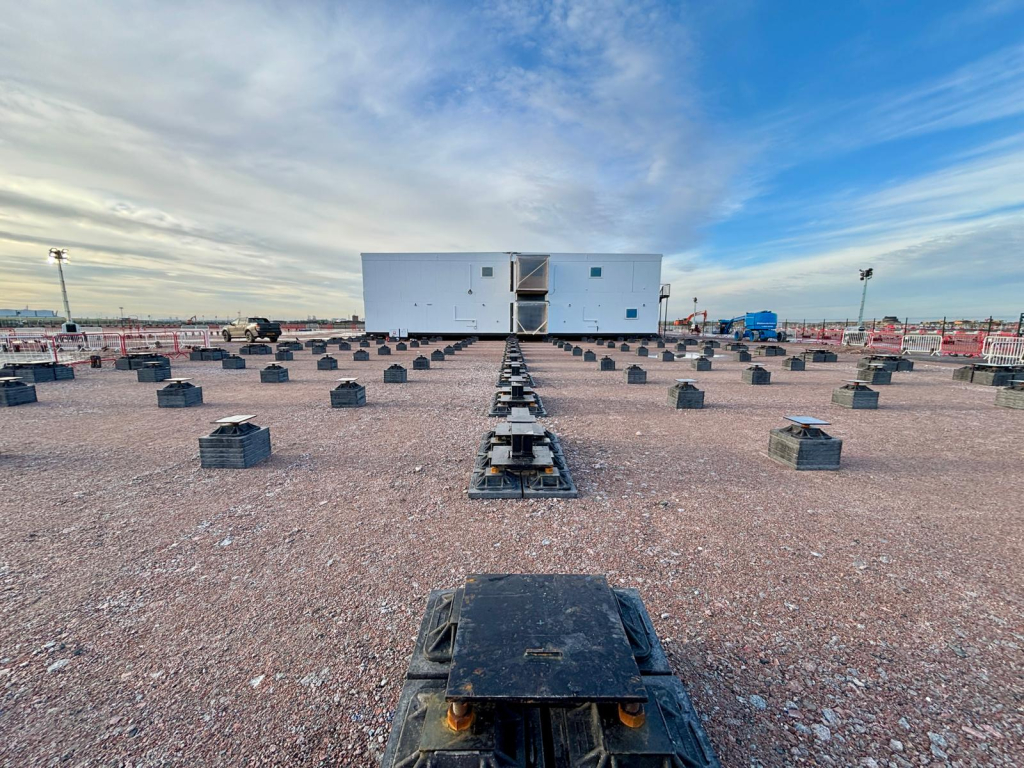
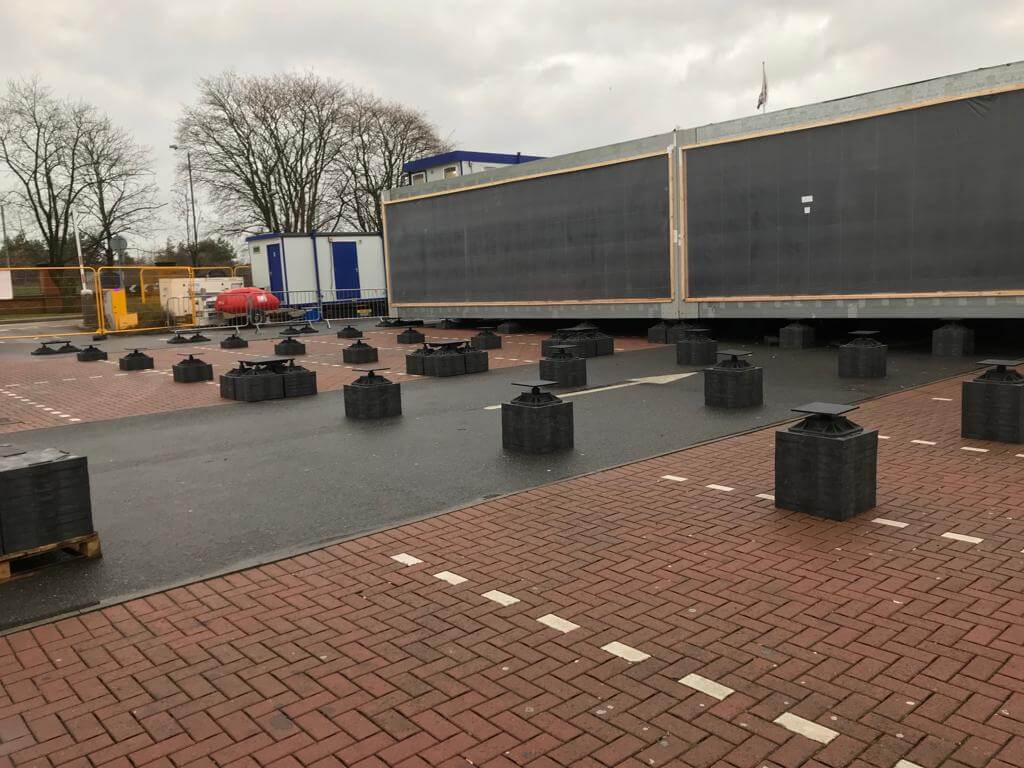
However, alternative systems can be used that require little-to-no ground preparation. Enter the Jackpad® system, a foundation for modular and portable buildings that promotes sustainability before the building arrives on site. Unlike traditional excavation methods, the Jackpad® system preserves soil structure and helps protect the surrounding ecosystems. They are made from completely recycled plastic and steel, and at the end of their lifecycle they can be recycled again.
Other efficient alternatives like screw pile foundations further enhance sustainability by significantly reducing the need for concrete.
Both not only lowers carbon emissions but also shorten installation time, creating a cleaner, quieter site with less environmental disturbance. Plus, streamlined installation of these sustainable foundations mean fewer vehicle movements, cutting down on transport emissions and overall site waste.
Offsite Manufacturing: Precision & Waste Reduction
Modular buildings are manufactured off site in a factory-controlled environment, which provides many sustainable benefits. Construction waste is vastly minimised with modular buildings, as manufacturers will adopt precise material usage, where excess materials can either be reused or recycled. Less waste is produced thanks to materials being stored in sheltered settings, protecting them from weather damage and ensuring they’re handled correctly.
Manufacturers will use bulk purchasing and optimised cutting techniques. This is because modular projects often involve repeatable components, so materials are ordered in large quantities at lower cost, and advanced machinery will cut them with minimal offcuts. These efficiencies not only reduce waste but also lower overall project expenses.
Factories can streamline production, use energy-efficient machinery and minimise transport movements within the build phase. In contrast, traditional construction sites will require multiple deliveries, temporary power setups and extended timelines.
Materials Choice: Choosing Low-Impact Options
From the foundations and footings to the walls, cladding and insulation, modular buildings are made from a variety of materials. For the foundations, the Jackpad® system is possibly the most sustainable choice you could choose. Thanks to every unit being made using 100% recycled plastic and steel, you’ll not only be choosing a foundation system that requires little energy for production, Jackpad® units will never enter landfill. They’re designed to be restored and reused, and can be recycled and reused over and over again.
Modular building frames are often made of steel, which is both strong and recyclable. Wood provides natural insulation and is perfect for sustainable walls, floors and framing. Other materials like plastics, composites, glass, foam and fibreglass insulation all work together to make modular buildings energy efficient, durable and visually appealing.
Transport & Installation: Lowering the Carbon Footprint
Normally, traditional construction projects require constant back-and-forth deliveries of materials and installation on-site is lengthy and disruptive. That’s not the case with modular construction. Materials and modules are lightweight, so more can be loaded onto vehicles, requiring less trips which results in less emissions. With everything in place, including footings and foundations, modules can be installed onsite in a matter of days, lowering the overall carbon footprint of the project.
Energy Efficiency in Design
Modular buildings are designed for strong energy performance, with factory-built components achieving high levels of insulation and airtightness. The Jackpad® system supports this by providing precise, level foundation, helping modules fit tightly and perform as intended. Modular designs also easily incorporate renewables like solar panels and heat pumps. Smart building systems further optimise energy use, while the stability of Jackpad® ensures long-term performance and efficiency are maintained.
Interior & Finishing: Sustainable Choices Inside
Sustainability for modular buildings spans the foundations and footings, the exterior materials and the interior finishes. Low-VOC paints, durable flooring and efficient fixtures will all be included in the design. Water-saving systems are often included to reduce consumption. Like the Jackpad® foundation system, modular interiors are also designed for longevity and adaptability, reducing the need for frequent refurbishment.
Lifecycle Benefits: Beyond Construction
Modular buildings offer strong lifecycle advantages, especially when paired with systems like Jackpad®. These foundation pads are durable, low-maintenance and avoid the need for permanent concrete. This allows buildings to be relocated and reused, supporting circular construction. A stable, well-levelled base also helps preserve structural integrity and energy performance, reducing operational costs over time.
Challenges & Considerations
Despite the benefits, modular construction has some challenges. Perceptions around quality can still be a barrier, even though standards are high. Upfront design decisions must be finalised early, limiting late-stage changes. Transporting modules can also present logistical constraints, particularly on restricted sites. Careful planning helps mitigate these issues.
Building Smarter for the Future With Jackpad
Sustainability and modular buildings go hand-in-hand. That starts with the right foundations and footings. Jackpad® is the perfect foundation system for any sized modular project, whether it’s for housing, classrooms or commercial endeavors. Our team performs site surveys to make sure the right number and configuration is used for your buildings. We support a holistic approach to modular building projects, and will install the units quickly and safely so modules are ready to be placed. Buy or hire the perfect sustainable modular building foundations by getting in touch on +44 (0) 116 286 6966 or email enquiries@jackpad.co.uk and tell us about your project.