Modular buildings have been growing rapidly in popularity in recent years as a cost-effective way of quickly adding space to businesses and schools. This blog post from the experts at Jackpad® will look at what considerations need to be made to ensure your installation has a long lifespan, with a particular focus on the importance of good foundations.
Understanding Modular Building Lifespan
Like any construction, the lifespan of a modular building depends on factors including design quality, materials used, the surrounding environment and ongoing maintenance. As a guide, temporary modular structures are generally designed for 25 to 30 years of service life, while long-term modular buildings can remain in use for 50 to 60 years if looked after properly. In fact, because they’re built in controlled factory conditions with strict quality standards, modular units often show fewer signs of wear over time. Let’s have a closer look at how modular building longevity can be affected by these considerations.
Materials
It’s no secret that better quality materials will last longer, and choosing cheaper materials for a building that needs to last is a real false economy. Modular buildings are generally made with robust steel frames, treated timber and weather-resistant cladding – some are even crafted from shipping containers, which are inherently strong and weatherproof.
Maintenance
Routine maintenance plays a major role in extending a building’s lifespan. Regular inspections of roofs, seals, joints and finishes can prevent small issues from developing into major problems. A well-maintained modular building can remain in excellent condition for decades, while neglecting basic upkeep can significantly reduce its expected service life.
Environment
Modular buildings need to be built to withstand their natural environment. The British weather ranges from sunny and windy to rainy and snowy. Consideration must also be given to factors like coastal exposure and the heightened erosion of saltwater and sea winds. With durable coatings, effective drainage and the right foundations, modular buildings can perform reliably even in harsher environments.
Insulation
Whatever the time of the year, good insulation works hard to keep the environment inside your modular building consistent and comfortable. Temperature fluctuations, moisture and condensation can all shorten a building’s lifespan, but high-quality insulation plays a major part in reducing their effect on the structural components of your building.
Quality
Overall quality in everything from the initial design to the actual construction of each modular unit will ensure finished buildings stand the test of time. Modular units are factory-built in controlled conditions with stringent quality checks, offering a consistency and longevity that’s often superior to traditional construction methods.
Foundations
The foundation is arguably the single most important factor in determining a modular building’s longevity. A solid, stable foundation prevents shifting, uneven settling and water ingress, all of which can cause long-term damage to your buildings. Whether your installation uses a traditional method or a modern, innovative system like Jackpad®, your choice of foundation will directly influence structural integrity, safety and durability, and deserves further consideration before installation of your building begins.
The Role of the Foundation in Modular Construction

Like any building, the role of the foundation in modular construction cannot be understated. It must act as a solid base for all that is placed on top of it, distributing the load evenly while also acting as a moisture barrier. It must prevent shifting and uneven settlement, supporting the long-term stability of each installation.
Whether short-term or long-term, choosing the right foundation system is critical to preserving the performance and lifespan of any modular building. Let’s have a closer look at some of the options available to you for your modular building foundation, from the traditional to the innovative.
Common Foundation Types for Modular Buildings and How They Influence Lifespan
Concrete
Concrete foundations are the traditional choice for portable buildings, offering stability and strength when properly poured and cured. However, poor drainage or ground movement can cause cracking over time, shortening a building’s lifespan. Concrete is also permanent and unadjustable, making it difficult to adapt if your site or layout changes. Find out more about the differences between the Jackpad® system and concrete here.
Crawl Space
Crawl space foundations elevate modular buildings slightly above the ground, helping with ventilation and access for maintenance. They can protect against moisture damage when designed well, but require consistent ventilation and upkeep to avoid damp or pest problems. Poorly maintained crawl spaces can reduce a building’s structural lifespan through rot or corrosion.
Basement
A basement foundation offers additional usable space underneath your modular installation – providing a literal basement similar to the foundation for a house. When properly sealed and drained, basements can protect against frost and damp, but they require deep excavation and are vulnerable to water ingress if not correctly waterproofed, which can lead to costly repairs over time.
Deep (Piled)
Deep or piled foundations are used on soft or unstable soil, transferring the building’s weight to stronger ground layers below, not unlike how skyscrapers are anchored to underlying bedrock. They provide exceptional support and stability for modular buildings on challenging terrain. They are expensive, however, and require specialist installation, limiting their cost-effectiveness for more temporary installations.
Jackpad®
The Jackpad® modular foundation system is a unique, reusable and highly adaptable alternative that supports durability and minimal ground disruption.
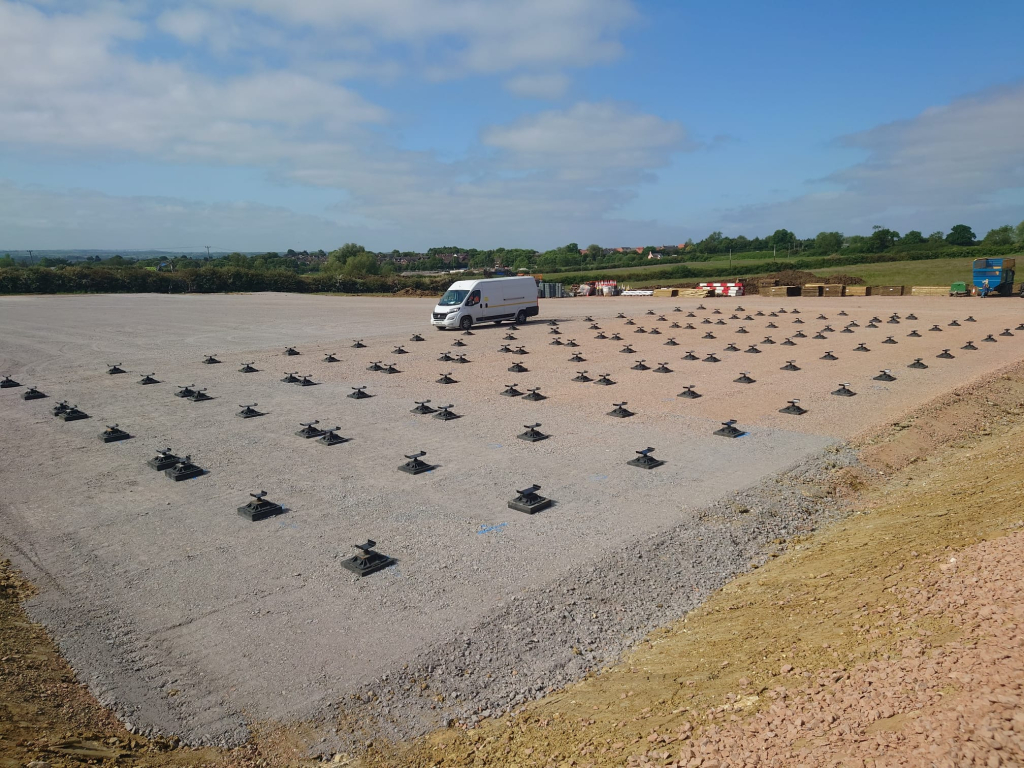
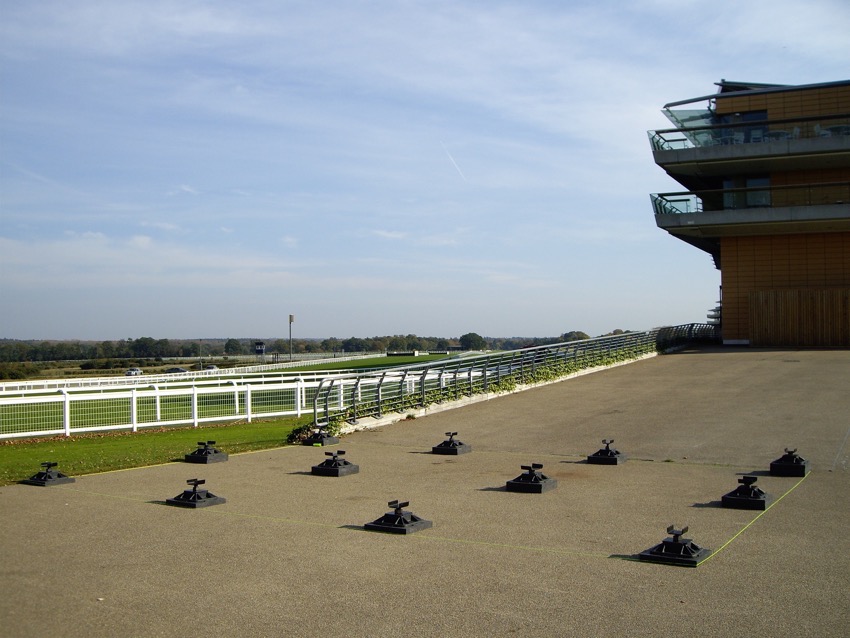
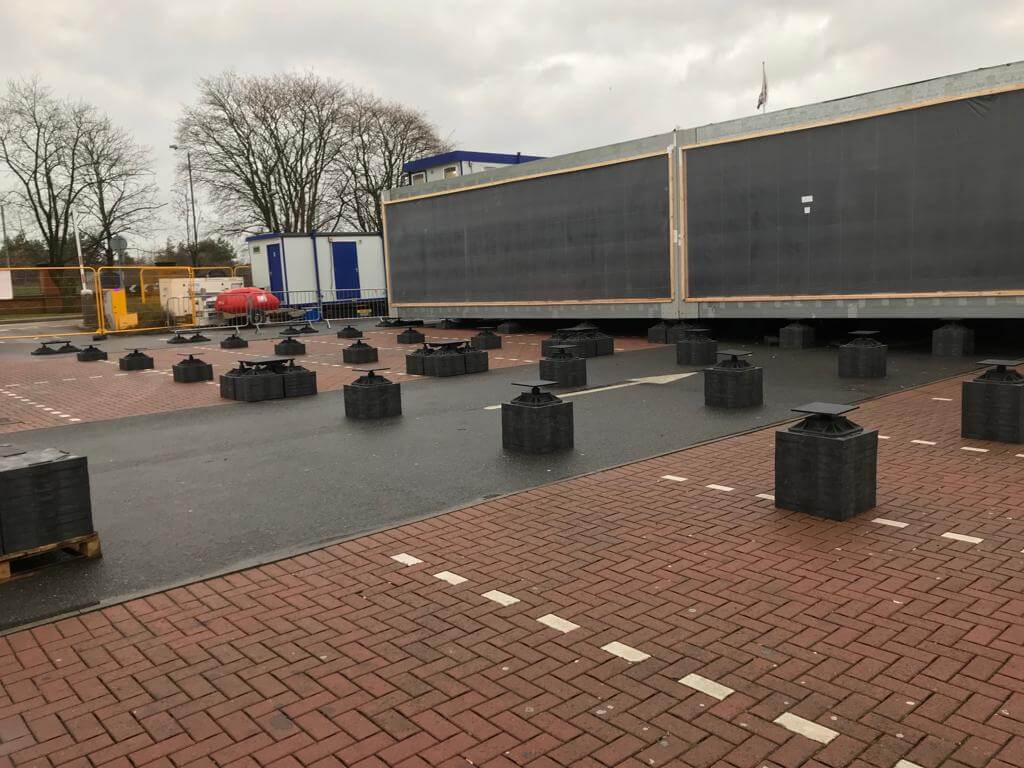
Ours is a three-part design, with each unit made up of a steel adjuster, plastic support block and incremental packers, which create a stable, level base on almost any existing surface.
Fully load-tested and resistant to moisture, corrosion and ground movement, the Jackpad® system protects modular buildings from issues that typically shorten foundation life. For short-term installations, we even hire out the system, and when each project is complete, we then clean, recondition and reuse them, making Jackpad® both cost-effective and sustainable.
Environmental and Site Considerations
The ground on which a modular building sits will always be closely tied to the longevity and robustness of the building itself. Finding the best foundation to bridge the two is vital, with particular relevance to the conditions and environment of the site it will sit on. For example, poor drainage leads to waterlogging, while unstable or soft soil causes shifting and uneven settlement.
Before installation begins, it’s crucial to conduct a detailed site survey to understand these factors. Jackpad® foundations are designed to adapt to most site conditions with minimal preparation if a suitable ground bearing capacity is achieved. A full site assessment ensures your use of the Jackpad® system always delivers a safer, longer-lasting installation.
Choosing Jackpad® Foundations for Longevity
In conclusion, there are options when it comes to choosing your foundation type, though we believe few are as resilient and adaptable as Jackpad®. By distributing weight evenly, compensating for ground variation and preventing water ingress, Jackpad® protects your investment from the ground up.
With our system, we can handle delivery and on-site installation, whether for a single modular unit or large, multi-storey installations. We make it easy to get the foundation that will best support your needs.
Contact our expert team today on 0116 286 6966, via enquiries@jackpad.co.uk or through our online contact form to discuss your site requirements.