Traditional foundations for construction projects span concrete strips, trench-fills, concrete piles and raft foundations. While these are commonly used across the UK, there is a high demand for faster, low-disruption, more sustainable and cost-effective foundations for construction.
Supporting all of these incentives is the Jackpad® non-concrete, non-invasive foundation system. Ideal for sectors beyond construction, the Jackpad® foundations have become a valued choice for different projects, acting as a viable and sustainable non-concrete foundation. This guide explores where non-invasive and non-concrete foundations like ours are most suitable in construction.
What are Non Invasive Foundations?
Let’s quickly answer what are non-invasive building foundations?
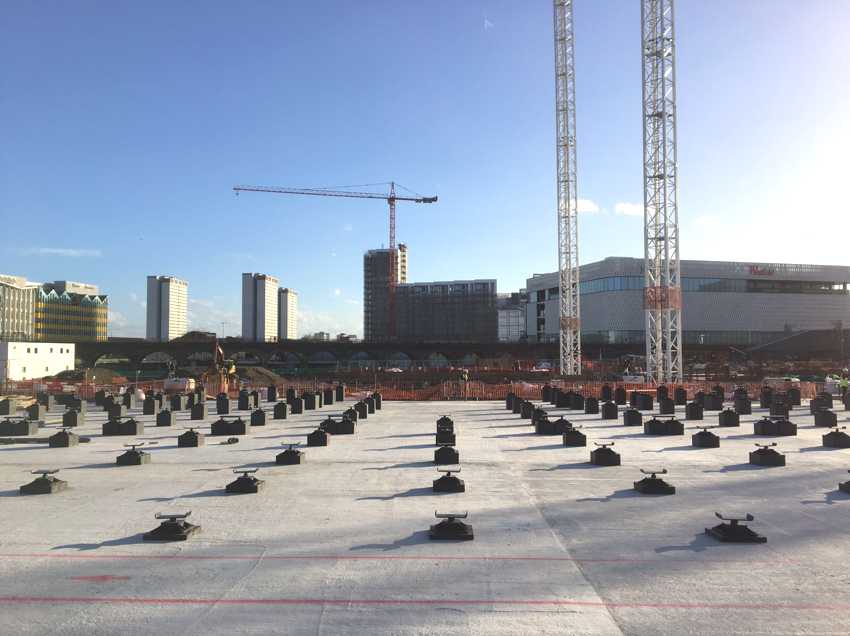
Non-invasive building foundations support buildings and structures without the need (in most cases) for substantial excavation, groundwork or pouring of concrete. They are surface-mounted foundation systems that evenly distribute the load of the structure across the ground surface.
With the sharp rise in modular building developments over traditional brick-and-mortar, non-invasive construction foundations have been a blessing, as they help speed up project timelines and can be used to support both short- and long-term projects.
How Do They Work in Construction Projects?

Non-invasive foundations for construction sites provide a stable and reliable support system without the need for extensive excavation or concrete pouring. Many developers use systems like Jackpad® for projects where speed, flexibility and minimal site disturbance are priorities.
Non-concrete foundations transfer structural loads safely into the ground they sit on. Rather than relying on large concrete footings, these systems distribute the weight of the structure across multiple support points. This helps spread loads evenly, reducing pressure on any single area and maintaining stability over time.
The Jackpad® system is also adjustable, making it easy to achieve a perfectly level surface, even when working on sites with uneven ground and varying elevations. As a result, construction can proceed with minimal excavation, preserving the existing landscape and reducing both labour and material costs.
Unlike traditional concrete foundations, non-invasive alternatives do not require wet trades such as mixing, pouring or finishing concrete. There is also no curing period to wait for before construction can continue.
Installation Process Overview
The installation process for non-invasive construction foundations is straightforward and far faster than traditional foundation methods. This is how we handle things with our Jackpad® foundations:
- Site survey
A site survey will be conducted to assess ground level, site access and whether the non-concrete foundations are suitable.
- Placement
The foundation pads are positioned according to the project design. Minimal ground preparation might be required.
- Levelling
Each foundation pad is adjusted to meet the required height and alignment to ensure a consistent and accurate base for the structure, even on uneven terrain.
- Installation
With the foundations levelled and secured, construction on the main structure can begin immediately. Beams, frames or substructures are fixed directly to the foundation system, creating a stable platform ready for the next phase of the build.
Where Are Non-Invasive Foundations Suitable?
The construction sector is home to various types of developments and projects. It’s important to assess whether the development and structure is suitable for non-invasive foundations.
Choosing the right foundations typically depends on ground bearing capacity and structural load requirements. Ground bearing capacity determines how much weight the soil can safely carry, while structural loading requirements account for the weight of the building, its contents and any environmental forces such as wind or snow. However, non-concrete foundations like Jackpad® can typically be used for structures including:
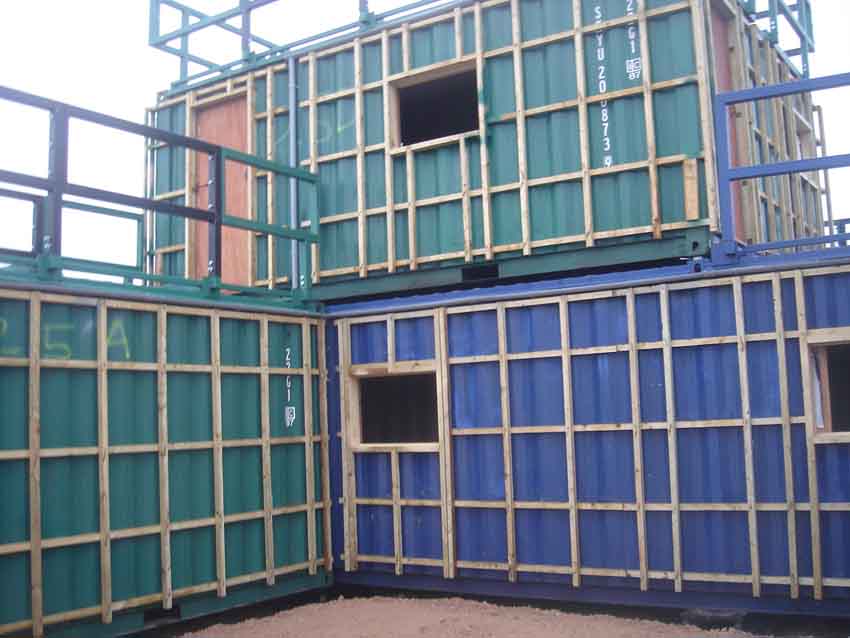
- Modular buildings – modular structures for healthcare, offices and schools can easily sit on non-invasive foundations.
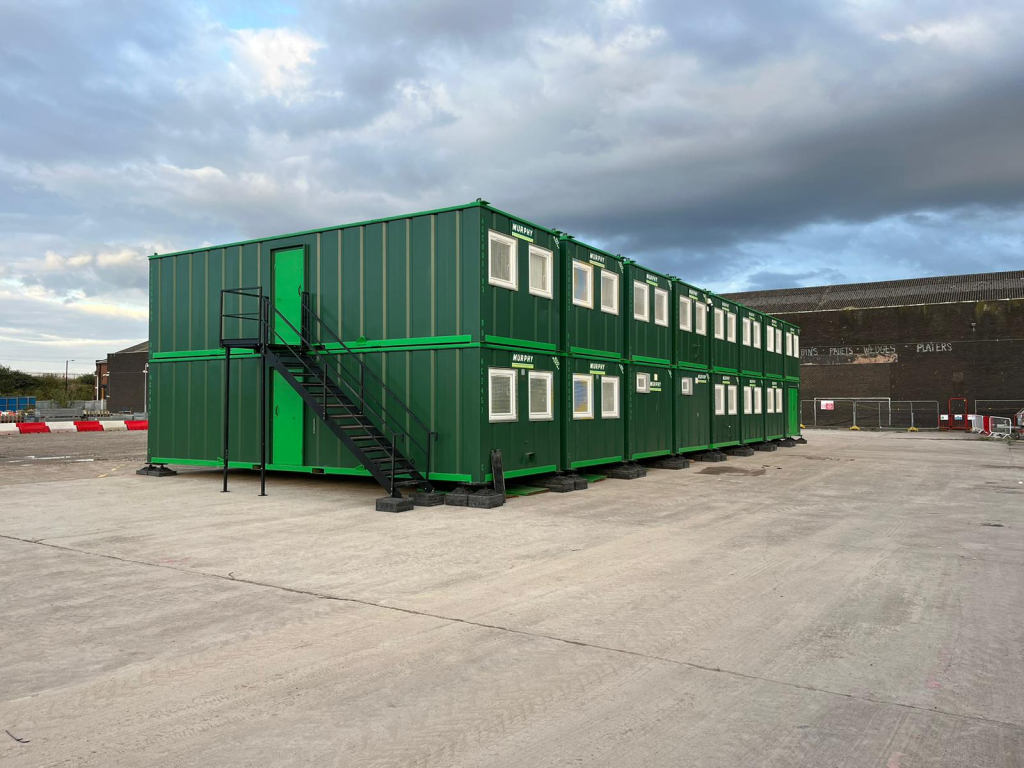
- Temporary and semi-permanent structures – non-invasive foundations are designed to be installed and reused for different temporary and semi-permanent developments, such as construction site offices or temporary utilities.
- Sites with access restrictions – alternative foundations to concrete benefit sites with difficult access, as they can be easily transported and positioned on different terrain, and then adjusted to handle slopes without need for extensive groundwork.
- Eco-conscious builds – developments on protected land or needing sustainable alternatives can benefit from Jackpad® because they require little to no excavation, are made from recycled materials and can be reused.
- Projects requiring reuse or relocation – non-concrete foundations can be reused, which is ideal for buildings that will be relocated.
Benefits for the Construction Sector
Compared to traditional foundations, non-invasive and non-concrete alternatives offer construction sites and their developments plenty of benefits.
Speed of Installation
Benefit from zero delays associated with excavation, substantial groundworks or curing for concrete. Non-concrete foundations like Jackpad® have helped developments be delivered far more quickly, and depending on conditions, up to a 100 pads can be installed in a day. Plus, they can also be installed in all weather conditions. Another reason why they’re beating traditional concrete for construction projects.
Reduced Site Disruption
Pouring and finishing concrete is disruptive. Take advantage of foundations that either require very little groundwork, such as removing vegetation, debris and topsoil, or none at all. This is ideal for constrained sites, where significant excavation and groundworks is either challenging or not allowed.
Sustainability Advantages
Concrete is resource intensive and produces high carbon emissions. While developments in concrete have seen it become more eco-friendly, non-concrete alternatives still take first place in terms of sustainability. Take the Jackpad® non-invasive foundations, for example. It’s designed for reuse and is made in the UK from recycled plastics, making it perfect for construction projects prioritising sustainability.
Cost Efficiency
Concrete requires lots of resources, site preparation and labour; all of which result in high costs. Finances for construction are constantly being reduced, so choosing a non-invasive alternative can help you save masses overall. There’s also the risk of costly remediation if the concrete foundation gets damaged by water, becomes cracked or it improperly settles. Alternative non-concrete foundations avoid these risks, and also require far less labour and site preparation. Plus, if you relocate your structure, the foundations can come along too, helping you avoid extra finances for brand-new foundations.
Flexibility
Concrete can’t be moved once cured and in place, but non-concrete foundations can. Alternative systems like Jackpad® can be removed and relocated to another site for a new structure and can be adjusted to meet certain elevations and ground conditions, perfect if you know your construction development is temporary or phased work is going to commence.
Limitation for Consideration
While non-invasive foundations offer many advantages, they are not suitable for every construction project.
Heavy permanent structures with significant load requirements may still require traditional concrete foundations to provide the necessary long-term support. The suitability of any foundation system depends on a thorough assessment of ground conditions, including soil type and bearing capacity. Load-bearing limits must always be respected to ensure structural safety and performance. For this reason, non-invasive solutions are generally best suited to modular buildings, lightweight framed structures, decking, garden rooms, walkways and other projects where speed, flexibility and minimal ground disturbance are key priorities.
Non-Invasive vs Traditional Foundations
Traditional concrete foundations have long been the standard choice for construction projects, offering a permanent, heavy-duty solution capable of supporting substantial structural loads. However, compared to Jackpad®, concrete often involves extensive excavation, wet trades, curing periods and longer installation times.
In contrast, non-invasive alternatives provide a faster and more flexible option. They can be installed with minimal site disruption, require no curing time and can be adjusted, removed or reused if project management requirements change.
Why the Construction Industry Is Adopting This Approach
- Rise of modular construction:
Non-invasive foundations complement modular builds by providing a fast and efficient base with minimal site preparation.
- Supporting sustainability and net zero goals:
The construction industry is under growing pressure to reduce its environmental impact. Non-invasive foundation systems can help lower carbon emissions by reducing excavation, minimising waste and eliminating the need for large volumes of concrete, making them far more sustainable.
- Need for faster build programmes:
Project timelines are becoming increasingly demanding, making speed of installation a key consideration. Non-concrete foundations can be installed and ready for construction immediately, helping to accelerate overall project delivery.
- Pressure on urban and limited-access sites:
Many modern construction projects take place in constrained locations where excavation and heavy machinery are impractical. Non-invasive systems offer a practical solution by reducing disruption and enabling installation in areas with restricted access.
How Jackpad Fits Into Modern Construction
The Jackpad® system is designed for modular and temporary buildings, including multi-story designs. Developed right here in the UK, each pad is made from recycled plastics and other materials, and has been specifically designed to be reusable, adjustable and engineered for real-world construction conditions.
Is Your Project Suitable for Non-Invasive Foundations? Speak to Jackpad Today
Non-invasive and non-concrete alternative foundations for construction sites and projects help save costs, time and labour. While they’re not suitable for all types of developments, they are the go-to alternative for modular buildings, temporary structures and constrained sites.
For over 25 years, the Jackpad® non-concrete foundation system has been a valued choice, with our team handling site surveys, delivery and installation of every foundation pad. Contact our team today to assess suitability for your project by calling 0116286 6966 or sending your details to enquiries@jackpad.co.uk.